
Can you imagine spending all day trekking up a mountain in the snow, your overstuffed backpack weighing you down as oxygen levels drop? Knowing that you could be swallowed by a landslide at any moment? Or snowed in with little power?
GOTO Events’ Managing Director, Steve Perkins, and Operations Manager, Edd King, recently spent 11 days navigating to and from Everest Base Camp, sitting at 5,364 metres (17,598 feet) above sea level, to raise money for SARAID.
SARAID is a UK-based charity that trains volunteers to search and rescue lives in urban areas following global disasters. When all other hope is lost, they locate survivors, rescue them from under dangerous debris, provide medical care in extreme conditions and bring families back together.
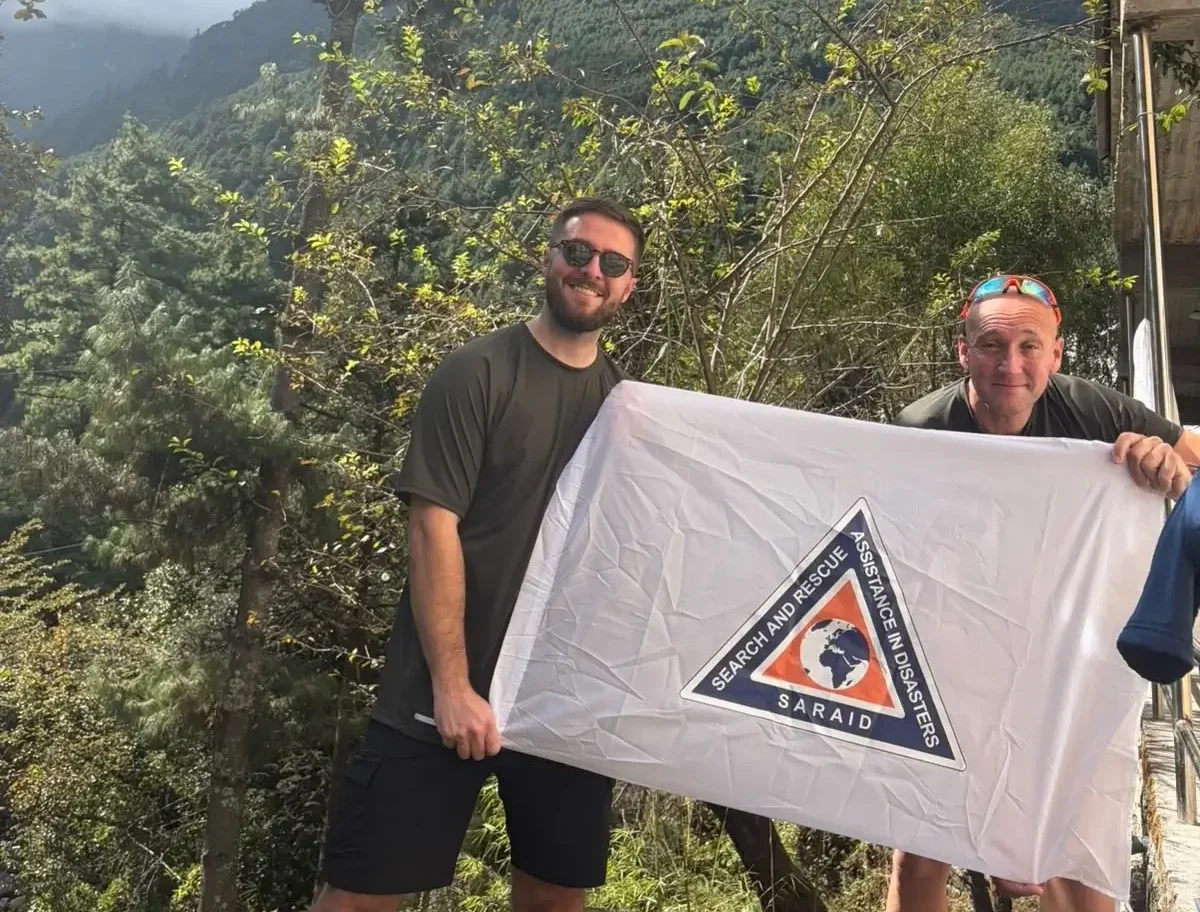
Training one volunteer alone costs SARAID £5,000, which is exactly what Edd and SARAID-volunteer Steve set out to raise.
- I'd seen first-hand just how demanding the selection process was, and how much commitment these volunteers put into preparing for situations most of us couldn't begin to imagine," shares Steve. "So this wasn't just about getting ourselves to Everest Base Camp. It was about supporting an organisation I'm incredibly proud to be part of."
Another factor made the trip important for Steve: SARAID had been one of the international rescue organisations that responded to the devastating earthquake that struck Nepal in April 2015 and killed thousands of people.
- We were walking through this incredible country, struggling with the altitude, terrain and exhaustion, while knowing that SARAID volunteers had been here when Nepal was facing an unimaginable disaster. We were there by choice, taking on a challenge we'd spent months preparing for. The people affected by the earthquake had no choice, and the rescue teams were there to help in extraordinarily difficult and dangerous conditions."
- That really puts things into perspective," he continues. "These volunteers leave their normal lives behind, travel thousands of miles and work in some of the toughest environments imaginable to help people they've never met. Knowing that SARAID had been here helping people in Nepal made every difficult step feel that bit more worthwhile."
Feeling the Pressure
While “base camp” might make it sound like a walk in the park, getting to South Base Camp in Nepal on foot is a 130-kilometre mountain trek that requires many days of acclimatising to low oxygen levels. Completing the journey to the Everest summit would take another 40 to 60 days and require intense training and preparation.
On the 16th October 2026, Steve and Edd arrived at Lukla, one of the most dangerous airports worldwide, before starting their ascent. “Flying through the mountains and coming on to land on that tiny runway was something else,” says Steve. “You look out of the window at the mountains surrounding you and realise just how remote you are. And the funny thing was, we hadn’t even started the trek yet!”
It was not a straightforward ascent: they sometimes had to walk more than 12 hours a day, the air getting thinner and thinner with each metre of elevation gained, and the trail went down as much as it went up. “It was soul-destroying, at times” says Edd about spending most of the day walking downhill, knowing they would need to walk all the way back up again. One day alone involved over 1,000 metres of climbing up and down, yet by the end of it, they had gained just 500 metres in altitude towards their final goal.
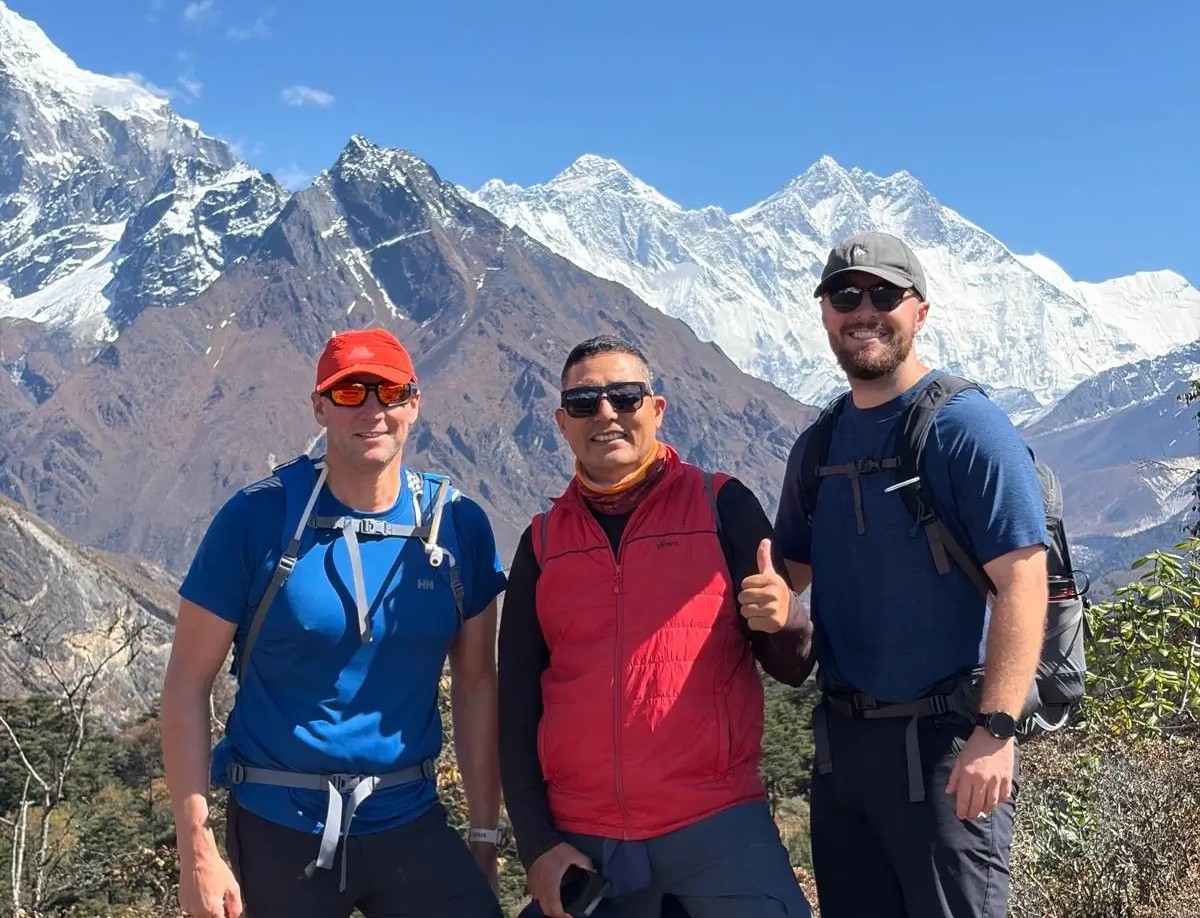
A distinct smell of grassy dung followed them throughout the entire trek. As wood is scarce in the mountains, dried yak dung is used as fuel for cooking and heating indoor areas. “They take about ten days to dry, and you can see fields covered in them,” says Edd. “They almost look like burgers. But they don’t actually smell bad.” The towns leading up to Base Camp also rely heavily on solar panels, though the energy can be weak and weather-dependent.
They were very lucky with the weather, with most days bringing clear skies and no rain. While the days brought baking sun and weather hot enough for shorts, the temperature at night dropped to as low as –10°C, so cold that ice clung to the inside of windows. It’s not uncommon to be snowed in for days on end, but the group encountered no weather-related issues.
They did, however, both develop a Khumbu cough, a common cough in the Everest region caused by dry air and excessive dust, which persists now, even after they’ve come back to the UK. Medical issues, such as altitude sickness and food poisoning, are two of the primary reasons people fail to make it to Base Camp, as meat and other food items are left out too long. Edd and Steve were particularly worried about getting food poisoning.
- There's a lot of pressure," shares Edd. "The last thing I wanted to do was let the charity down, let friends and family down who had donated by not making it, because I got food poisoning." They both made sure to wash their hands plenty, drank more than the recommended 3 litres of water a day and stuck to a largely vegetarian diet, consisting mainly of egg fried rice and egg fried noodles with vegetables (supplemented with lots of chocolate bars during treks).
A Meeting of Cultures: Sherpas, Temples & Teahouses
The journey offered rich cultural experiences, from visiting the Hindu temple Pashupatinath in Kathmandu before they started their trek, where they witnessed an open-air cremation, to staying in mountain towns on their way to Base Camp, such as Namche Bazar and Tengboche. They spent the night at local teahouses, fully-equipped family-run bed & breakfasts, owned by local Sherpas.
The Sherpas, a Tibetan ethnic group native to the Himalayas, have lived in the mountains for generations and even developed physiology adapted to the high altitude, such as thinner blood and high nitric oxide. Many work as guides and are highly accustomed to trekking up and down the mountain. Some of them even manage it in flip-flops!
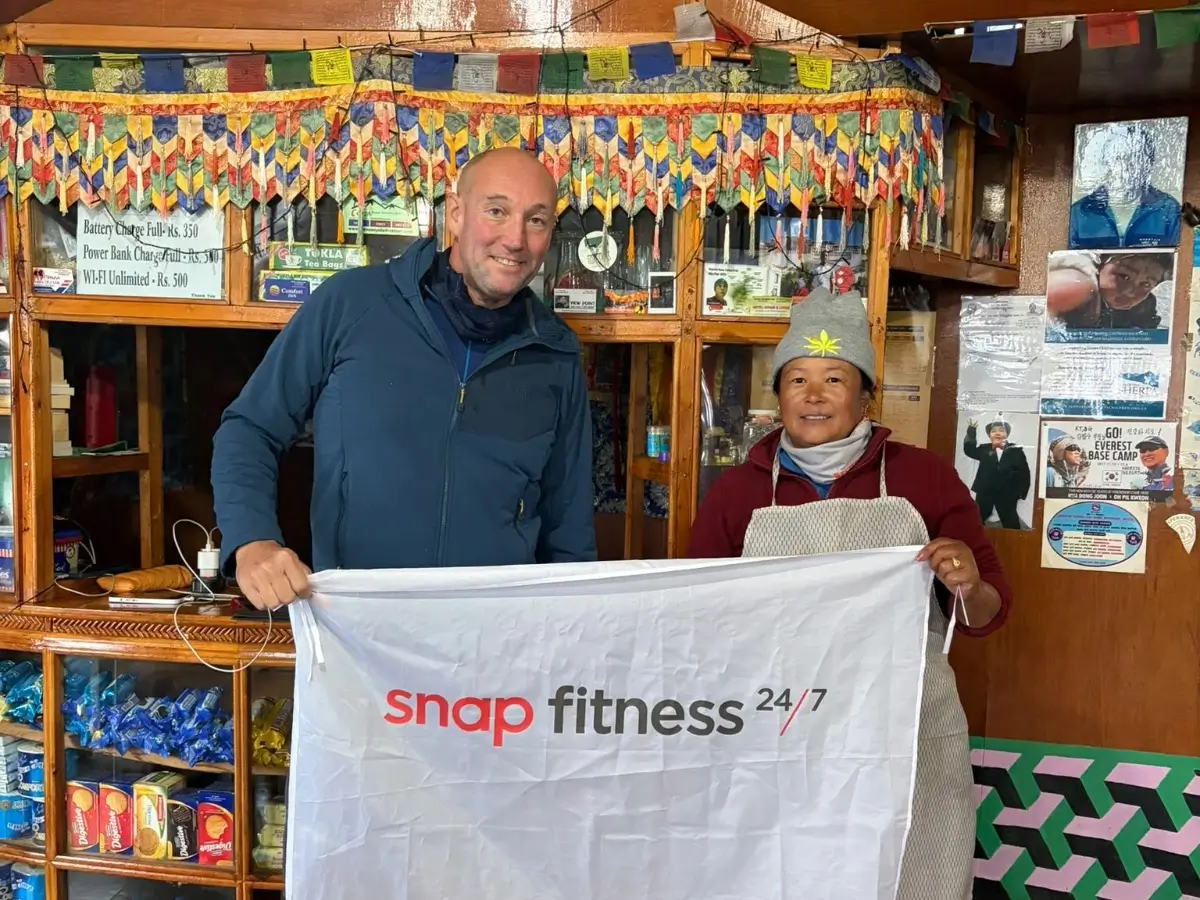
- One of the things that really struck me was the resilience of the people," says Steve. "Life up there is incredibly demanding. Supplies have to be carried for miles, often over the same difficult terrain we were struggling with, yet everyone we met was so welcoming and friendly. It really makes you think about how much we take for granted back home. The mountains were spectacular, but the people and culture were just as memorable."
Making Friends in Demanding Conditions
Edd insists he never once considered giving up. The knowledge that the trip was for charity, his stubborn nature and the camaraderie kept him going. “The banter really motivated me,” shares Edd. “If someone was having a bit of a rough day, you’d bring them up, and if you were having a bit of a down day, they would bring you up.”
- There were definitely some tough moments, particularly when we were feeling unwell," Steve agrees. "But there was always someone there to lift the mood, make you laugh or give you that bit of encouragement you needed. Neither of us wanted to let the other down, and we certainly didn't want to let down everyone who had supported us and donated."
Not everyone made it to Base Camp. The trek is incredibly physically demanding, and many experience altitude sickness. Some of the other hikers had to be carried back down on horseback or even flown to the hospital by helicopter.
By the time they made it to Dingboche, at 4,410 metres (14,470 feet) above sea level, one of the other hikers in Edd and Steve’s group had completely stopped eating and sleeping. “He knew he was done. I think that takes more courage, to take a helicopter down and put your health first, than fighting on and doing long-term lasting damage.” The others were gutted, as they’d formed a proper friendship, but they respected his decision.
Feeling the Hiker's High at Base Camp
Arriving at Base Camp was an emotional experience. Edd and Steve both felt an immense sense of relief: relief that they’d made it, that they hadn’t let the charity down. All the pressure and nerves that had built over the past many months were released, like a popping balloon.
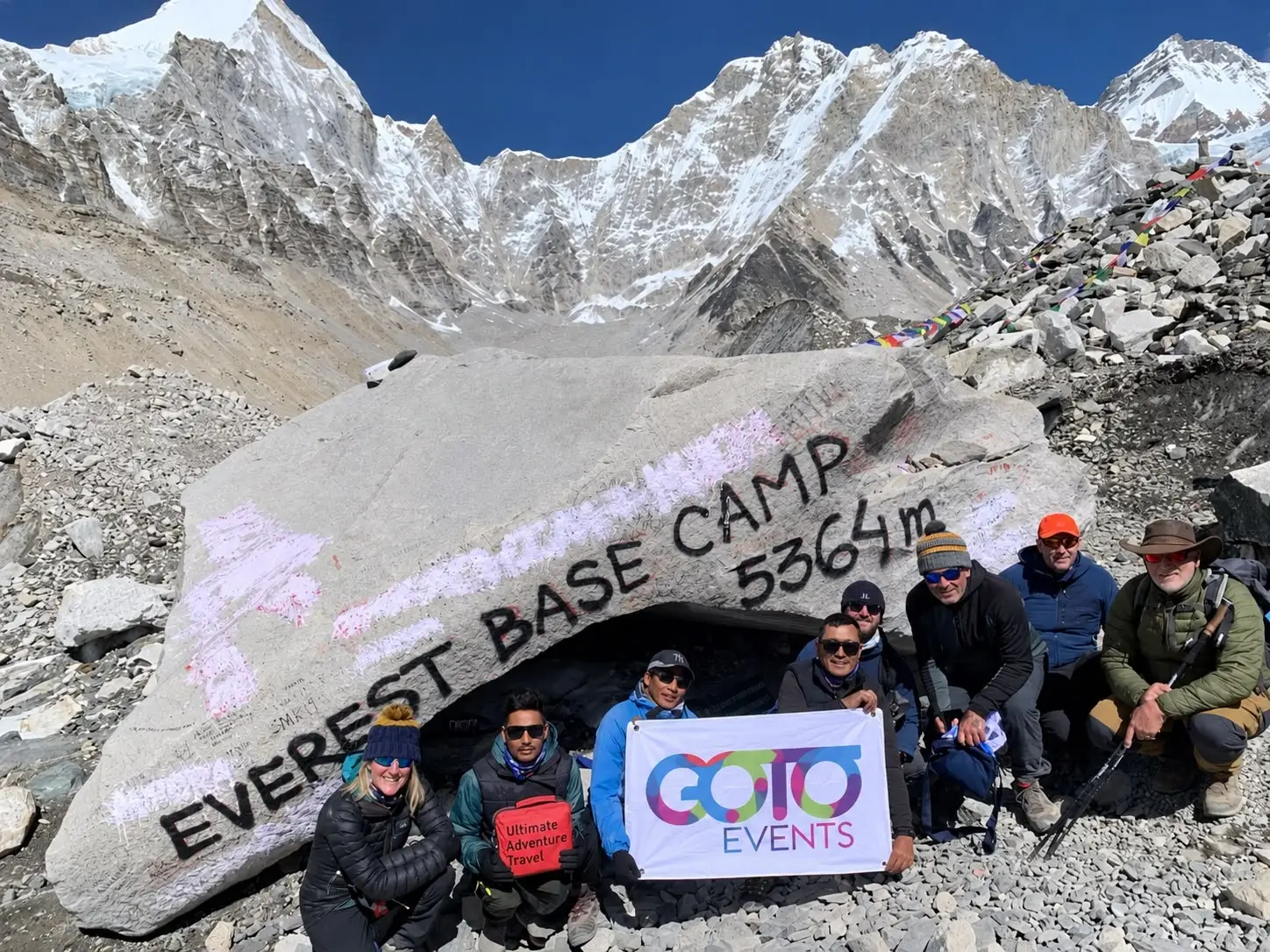
After taking photos and giving each other celebratory hugs, everyone took themselves to the side to be alone. They needed a few moments to take everything in, to process their emotions, and several group members had brought orders of services or ashes of loved ones to honour their memories at Base Camp.
- I had a good old cry," says Edd. "We've actually made it. A year of build-up. Eight days of trekking. We're finally here." Sitting by themselves, all the emotions came out: overwhelming pride, inner peace at being thousands of kilometres away from their day-to-day life, the hiker's high.
- It wasn't about conquering Everest or proving anything to anyone. It was about completing something we'd committed to, pushing ourselves further than we thought possible and, most importantly, raising money and awareness for SARAID."
A Quick Descent
While they spent 8 days climbing to Base Camp, the 9th day was almost the most challenging. After waking up at 4.30 in the morning, they hiked to see the sunrise at Kala Patthar – at 5,644.5 metres (18,519 feet) – and then started their descent by walking another 30 kilometres. “You’re going up and down, up and down, it’s dusty, you’re cold, you’re absolutely exhausted,” says Edd. Moreover, it was so cold that all their bottled water froze.
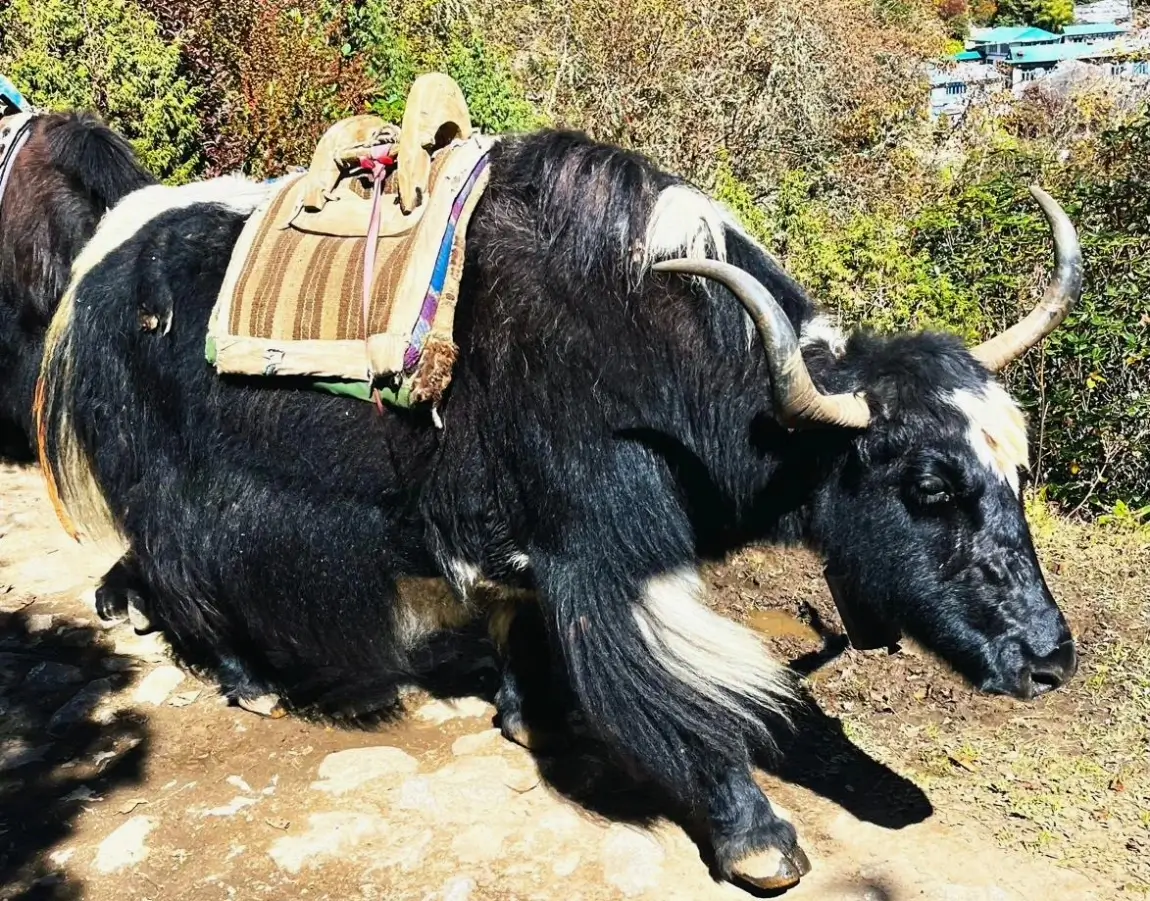
On the way back down, they felt their appetites returning and their steps becoming lighter. They once again stopped in the town Namche, and took advantage of the modern amenities, such as visiting the Irish pub, a masseuse (necessary after carrying all the heavy equipment!) and an art gallery, where they bought some local art as keepsakes. And, while the food on the trip had been palatable, it had also become slightly unexciting after eating the same things all day for a week, so they invited the whole group and their porters for woodfire-oven pizza!
After 11 gruelling days, the group made it back to Lukla, all in one piece. It was late in the evening when they felt the teahouse shake and heard the windows rattle. Apparently, there had been a magnitude-7 earthquake in Tibet, with aftershocks travelling 665 metres from the Nagpu region to Lukla. This was a grounding experience, as the team realised they weren’t quite out of the woods yet.
The Sponsors Who Made It Happen
Now, back in the UK, they both miss being in the mountains. “It gives you so much perspective,” says Edd. “If I’m having a bad day, or if I’m being a bit of a princess about something, I think: hang on a minute. I was happy as Larry up there when I hadn’t showered for seven days; I was just in the mountains, looking at all the great views.”
- There's something about being in those mountains that makes everyday problems seem very small," says Steve. "I already miss the simplicity, the people, the mountains and that feeling of adventure. It's an experience that will stay with me forever."
During the year leading up to the journey, Steve and Edd were working hard, applying for sponsors and utilising their network to raise £5,000 for SARAID. They were sitting in Namche on day 3, drinking ginger, lemon and honey tea, when the notification that they had surpassed their goal popped up. “That was a massive moment for us,” says Steve. “To know so many people were behind us before we’d even reached Base Camp was an incredible feeling. It gave us a huge boost. Every donation was another reminder of why we were there and who we were doing it for.”
They are very grateful to their network, sponsors and partners who were all vital in making the trip successful: Snap Fitness, ThruDark, Keela, Bridgedale, StormTech, PenCarrie, Páramo, NikWax, Pacerpole, Osprey, Nomad Mountaineering, Hartley’s Events, VenueScanner, Joe Browns, Concierge First, Expandly, The Funky Peach, ES Promotions and BCP Media Group, a collection of media and specialist outdoor and expedition brands.
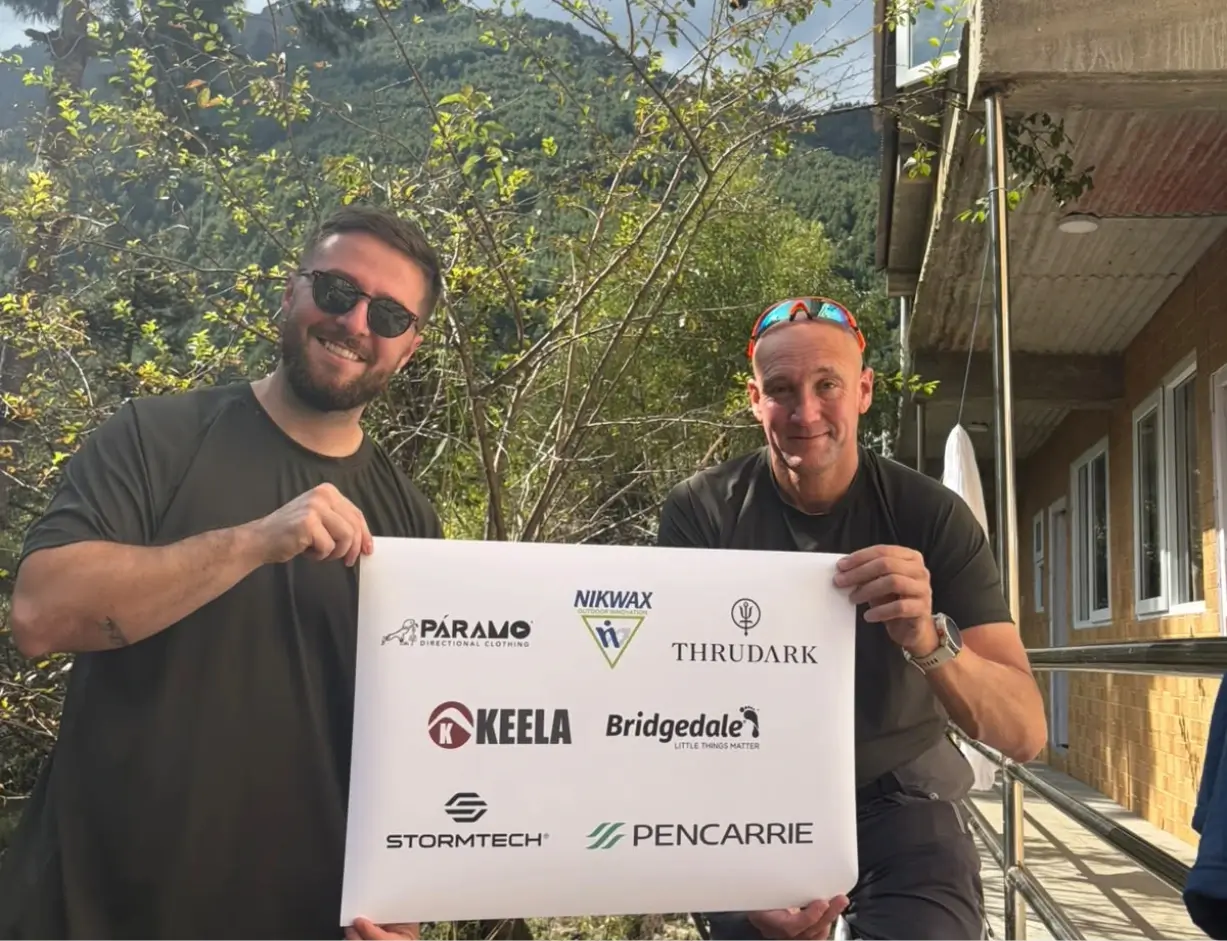
- One of the things we wanted to do was demonstrate that the biggest or most recognisable outdoor brands aren't necessarily the only ones producing exceptional kit," explains Steve. "We were fortunate to have the support of some fantastic companies, many of which don't have the same high-street presence as the big household names, but really know their products and understand what people need when they're out in demanding conditions."
Looking back on the trip, Steve shares: “Harder than we all thought it was going to be, mentally and physically, but the best thing I’ve ever done. And if our Everest adventure helps more people discover and support SARAID, then every single difficult step was worth it.”
Media Gallery


